
You know that businesses experience similar challenges across all sectors. For example, growing operational costs, unstable demand, pressure to scale faster with fewer resources, and others. Such problems seem relatable to almost any company, right?
However, it only appears that way. If you dive into any of these issues, you will quickly find that the solutions differ significantly and depend on the niche.
Retail businesses address rising operational costs by optimizing inventory tracking, automating order processing, or reducing returns. In the meantime, companies in other industries may focus on entirely different levers, such as internal workflow optimization or sales automation.
The same can be said about retail software development projects. While generic vendors may offer strong technical expertise, they often lack the deep understanding of retail-specific challenges. As a result, they cannot recommend the right features, integrations, and architectural decisions.
Without hands-on experience in retail workflows, even well-built, comprehensive solutions can miss critical details that directly affect sales, store operations, and customer satisfaction.
That is why our experts prepared a detailed list of retail software companies that combine technical excellence with proven domain expertise and cost-effective engagement models. With this article, you can choose a partner that offers retail software development services your company can rely on for years. Here is what we will cover:
- The importance of niche experience in software development
- Top 10 list of retail technology companies
- Common mistakes to avoid when selecting a development partner
Keep reading to make a budget-friendly choice and get long-term value from your project.

Retail Expertise vs Generic Development: Why Specialization Matters
Why do successful retail businesses choose to work exclusively with partners that have industry experience? The answer is simple: when working on retail projects, software developers immerse themselves so deeply in the business that they begin to think like retailers themselves. As a result, you receive a solution from a team that cares about your business outcomes as much as you do.
This bold statement is supported by clear evidence. Let’s review it in more detail:
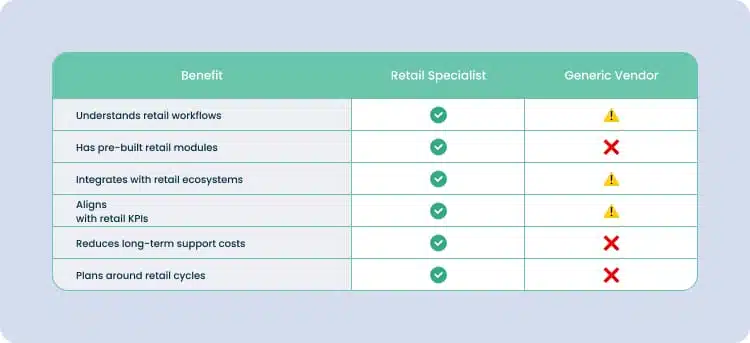
So, why should you choose an industry-focused partner over generic vendors?
Deep understanding of your workflows
Retail software developers know your challenges inside out, including seasonal spikes, fast-moving product SKUs, fulfilment rules, and omnichannel complexity. They understand that even a seemingly simple feature like real-time stock visibility can touch multiple systems and depend on numerous business rules.
By partnering with industry-focused experts, you get realistic estimates and custom retail software that accounts for operational dependencies, edge cases, and peak-load scenarios from the start.
Proven templates for retail needs
When you choose a retail software development partner with proven industry experience, you significantly reduce development costs. Most likely, the team has already solved similar challenges and can leverage pre-built modules for POS integrations, OMS, analytics, and other retail systems.
They may also have integration adapters for the existing systems, as well as established retail data models and schemas. By reusing these components, development teams shorten project timelines, optimize resource allocation, and implement your retail software solutions faster.
Lower total cost of ownership (TCO)
At first glance, partnering with a generic vendor may seem like an attractive option, especially when their pricing is lower compared to specialized providers. In reality, however, such collaborations often lead to unexpected cost increases. Common reasons include:
- Rework caused by misunderstood requirements
- Scope creep resulting from iterative fixes
- Longer QA cycles due to edge cases that retail specialists would anticipate in advance
In contrast, retail software engineers proactively identify potential pitfalls and design robust systems from the outset, which helps reduce maintenance and support costs over time.
Better alignment with your KPIs
In addition to project KPIs that are 100% trackable, retail software developers understand the metrics your e-commerce or retail business depends on. For example, customer behavior metrics, inventory turnover, sales trends, conversion rates, and more.
By keeping your KPIs in mind, retail software development teams build systems that meet both project metrics and business requirements. This ensures your retail management software supports your business from every angle and helps you grow.
Faster time to market during peak seasons
For retailers, timing is everything. You cannot afford significant downtime. Every hour your systems are not functioning properly means lost customers. Retail technology companies are fully aware of these nuances and organize projects so that your team and customers barely notice the changes.
The releases are also planned around seasonal cycles, which means updates and new features are deployed at the most convenient times. The team avoids peak sales periods and ensures smooth retail operations throughout the year.
Easier integration with retail systems
Retail tech stacks are often polyglot and sprawling:
- ERP systems / financial systems
- eCommerce platforms
- POS hardware and firmware
- Fulfillment and logistics partners
- Marketplaces and other e-commerce APIs
Vendors with retail experience have already worked with these systems and know the quirks, limitations, and best integration patterns. Generic developers frequently learn these stacks from scratch.
Awareness of retail compliance, security, and standards
Creating retail software solutions involves handing sensitive customer data, sales transactions, and regulatory requirements like PCI-DSS. A retail specialist is more likely to have:
- Documented compliance checklists
- Penetration test experience in retail contexts
- Design patterns for secure payment processing
This reduces risk for retail stores and protects their brand reputation.
As you can see, partnering with an industry-focused software development company protects your business from unexpected costs, security threats, reputational damage, and operational disruptions, ensuring smoother projects and more reliable outcomes.
Looking for a retail software development company with budget-friendly rates and proven expertise?
Submit your request, and our retail experts will reach out to you shortly.
Top 10 Retail Software Development Companies to Work with in 2026
Now, let’s look at the top-rated retail tech companies you can confidently partner with in 2026. We compiled this list based on a deep analysis of client reviews, profiles on leading rating platforms, and proven track records in delivering retail software projects.
1. Forbytes
Retail-first software engineering company with 14+ years of experience, affordable pricing, and high-level industry expertise
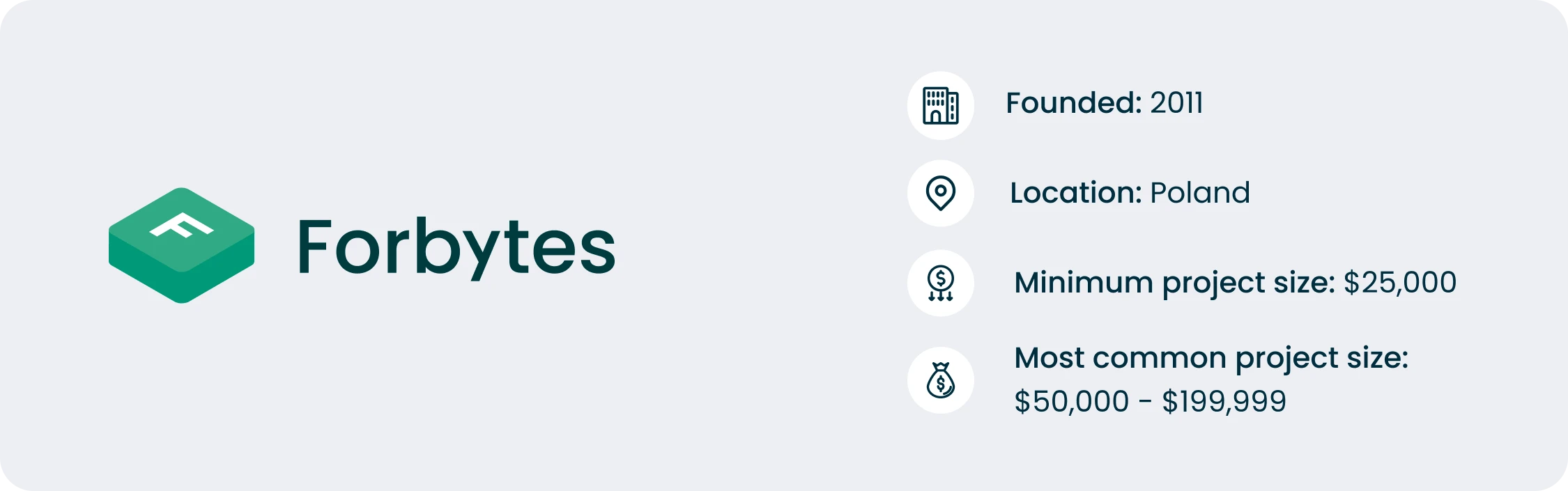
If you’re looking for a company that knows the retail industry inside out, you’re in the right place. Forbytes started with retail software development, and this industry remains the core specialization of their team.
Around 90% of Forbytes’ projects focus on custom retail software development, giving them extensive hands-on experience across diverse retail scenarios. The team supports everything from platform-based development, composable commerce, and retail integrations to custom system development and AI-powered analytics.
In addition to broad retail expertise, Forbytes has a dedicated Magento development team focused on platform-based projects. They also provide retail consulting services, based on their experience working with retail leaders like Home Furnishing Nordic, BHG, and Stenströms.
- Retail projects they’ve completed: PIM systems, OMS, third-party integrations, purchase management systems, AI integrations, Magento extensions, MTM tools, BI analytics tools, and more.
- Best for: Retailers looking for a deeply specialized retail partner that designs, builds, and evolves mission-critical retail systems for businesses of any size.
2. Computools
Large-scale custom development and IT consulting for complex retail environments
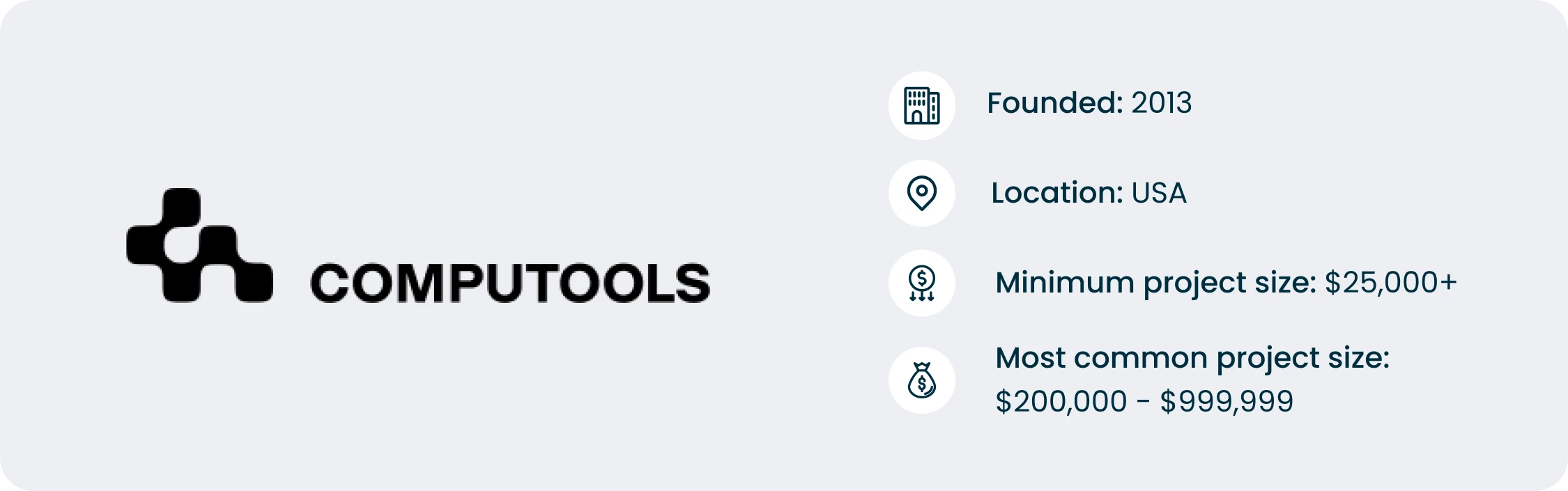
Computools employs more than 250 engineers who are ready to bring your project to life. As retail is one of the company’s focus industries, the team helps address a wide range of business challenges through technology, including manual workflows, inconsistencies across sales channels, siloed business processes, fragmented supply chains, and more.
- Retail projects they’ve completed: IoT tools, cash management apps, virtual try-on apps, data management platforms, and the like.
- Best for: Large retail organizations building custom, innovation-heavy retail technology at enterprise scale.
3. Itransition
Enterprise-grade technology partner for retail modernization and transformation
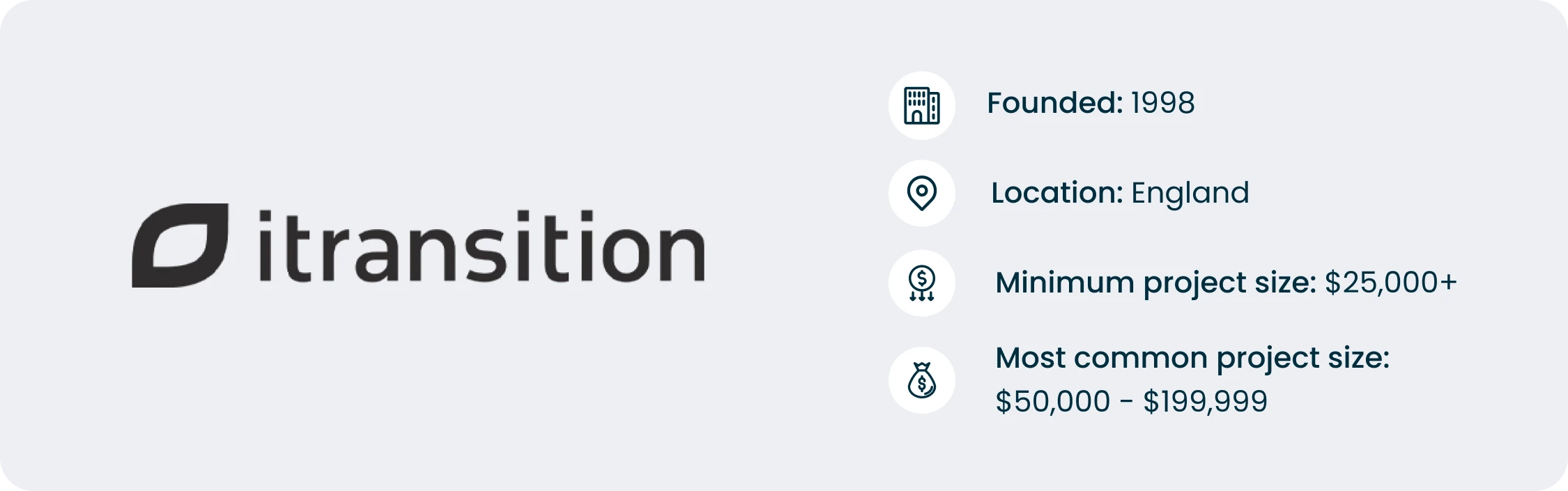
This retail software development company delivers both corporate and consumer applications to meet diverse client needs. The team supports retailers with custom development, consulting, software modernization, and third-party integrations.
- Retail projects they’ve completed: e-commerce consulting projects, order and inventory management solutions, POC applications, BI platforms, and others.
- Best for: Retail enterprises undergoing digital transformation and large legacy system modernization.
4. Zoolatech
Data- and AI-driven engineering team for advanced retail use cases

Zoolatech delivers practical solutions for the retail sector, helping businesses with e-commerce personalization, pricing optimization, AI adoption, inventory intelligence, and more. Although the company is relatively young, it is growing rapidly and expanding into global markets.
- Retail projects they’ve completed: B2B marketplace migrations, QA automations, advanced analytics platforms, cloud-based platforms, and beyond.
- Best for: Retailers prioritizing AI-driven personalization, pricing intelligence, and data platforms.
5. GEM Corporation
Cost-efficient development partner for operational retail systems and automation
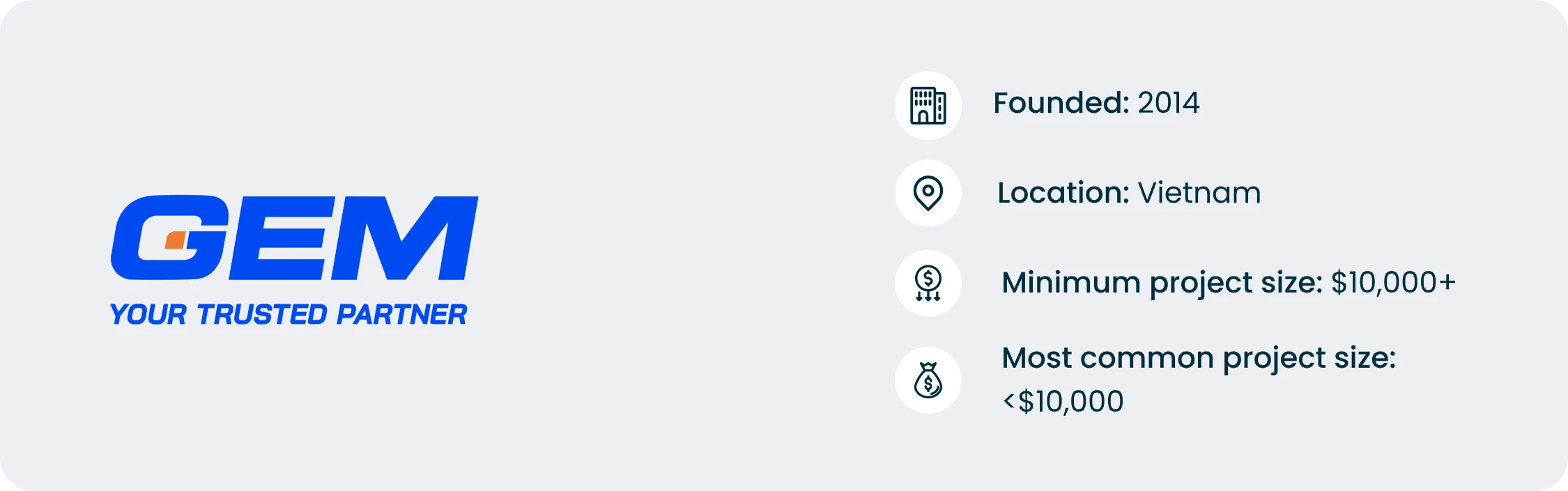
The company’s core services include AI and data analytics, cloud platforms and services, digital transformation consulting, custom application development, system integration, and e-commerce automation. After more than a decade of steady business growth, GEM employs over 400 professionals and delivers solutions that meet international standards.
- Retail projects they’ve completed: warehouse management solutions, digital payment platforms, CRM platforms, and more.
- Best for: Retailers seeking cost-effective offshore development for operational and back-office systems.
6. Simform
Co-engineering partner for retailers scaling delivery speed and capacity
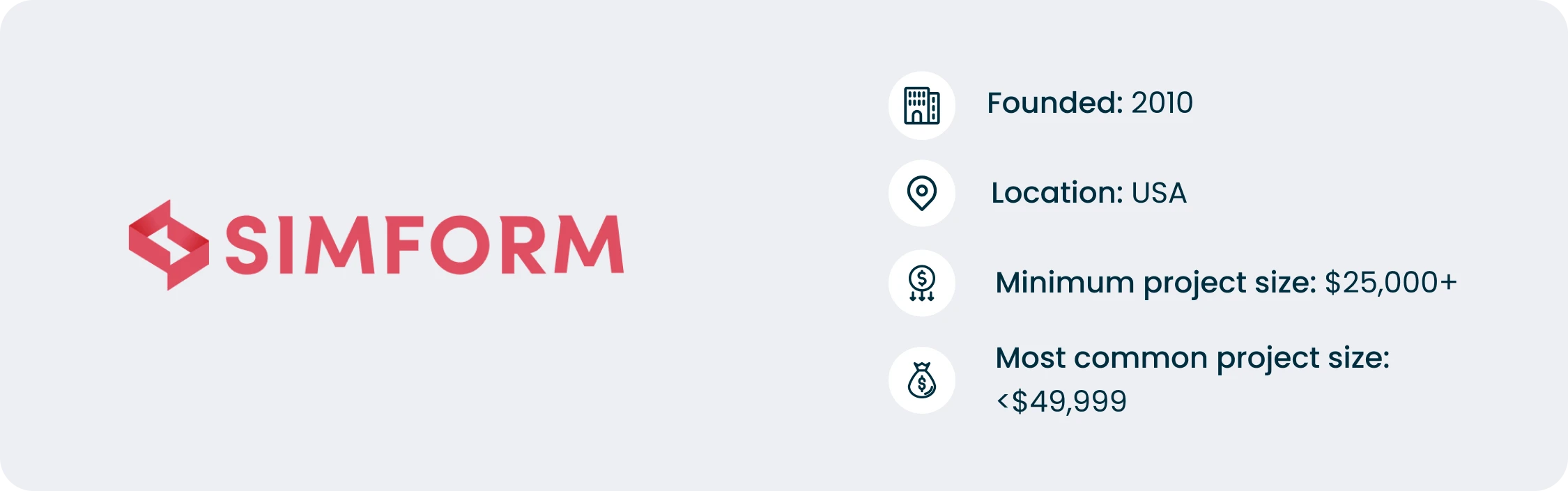
The Simform team consults, engineers, and designs software solutions to address complex business challenges with precision. They provide expertise in inventory management, headless commerce, POS solutions, and supply chain management, primarily serving enterprise and mid‑market clients.
- Retail projects they’ve completed: customer data platforms, enterprise applications, cloud integrations, IoT solutions, and the like.
- Best for: Retail companies that want to accelerate delivery by augmenting internal engineering teams.
7. Icreon
Digital transformation partner for experience-led retail brands
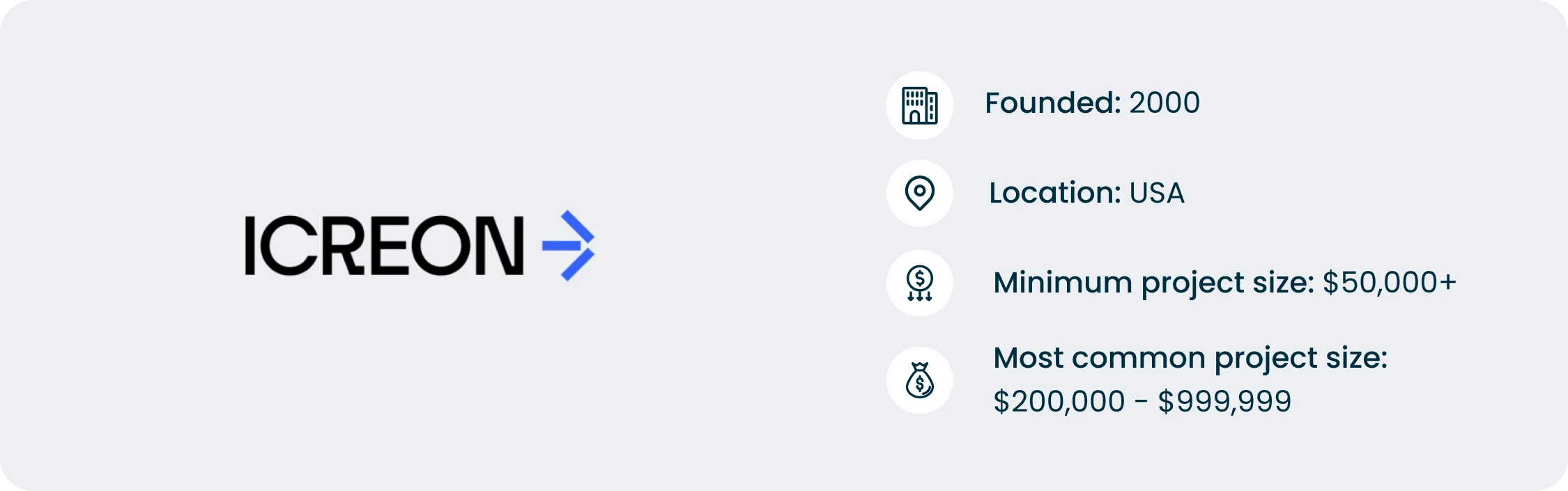
The company helps brands achieve what they call “digital velocity” by combining strategic consulting, digital product engineering, and customer experience transformation. Their expertise spans composable commerce, omnichannel retail experiences, digital strategy, data analytics, and cloud technologies.
- Retail projects they’ve completed: digital transformations, third-party integrations, replatforming, and others.
- Best for: Retail brands focused on omnichannel experience and composable commerce strategy.
8. Waverley Software
Long-term engineering partner for custom retail solutions

Waverley Software develops custom solutions for enterprise businesses and innovative brands. Headquartered in Palo Alto, with delivery centers across Latin America and Eastern Europe, their in‑house teams specialize in full‑lifecycle software development, from architecture and design to deployment and ongoing support.
- Retail projects they’ve completed: marketing platforms, mobile apps, blockchain solutions, and beyond.
- Best for: Enterprises requiring custom-built retail solutions with long-term engineering support.
9. Vention
Engineering talent provider for scalable retail platforms
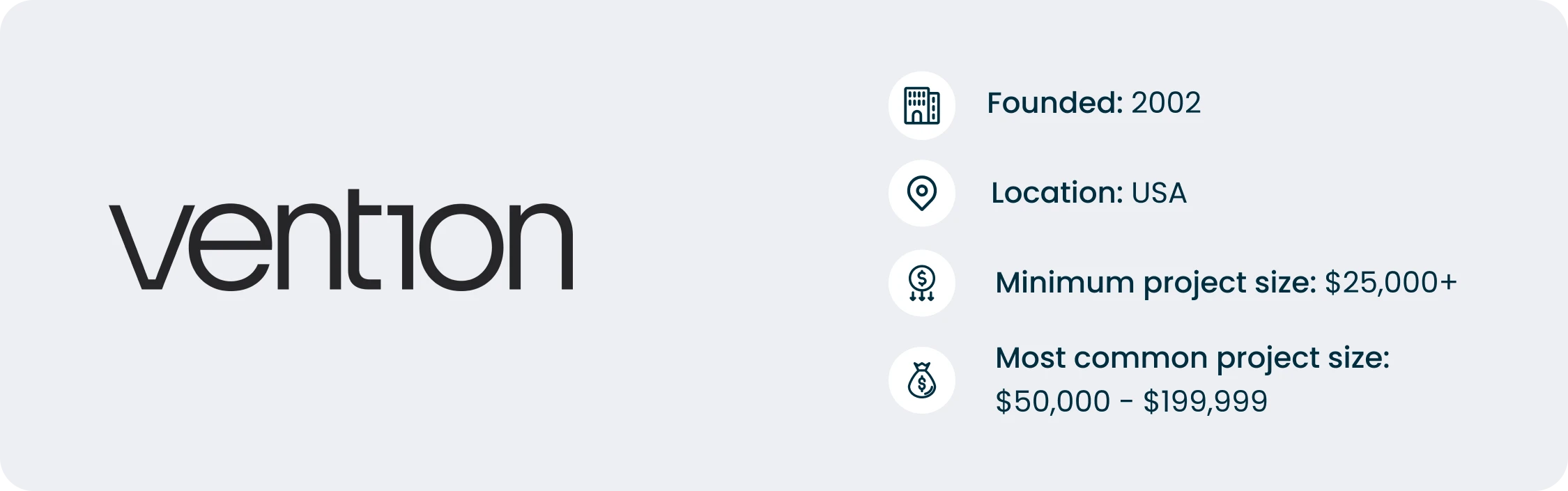
Although not exclusively focused on retail, Vention’s deep engineering expertise and flexible engagement models help retailers modernize omnichannel platforms, strengthen backend systems, create personalized customer experiences, and integrate advanced capabilities.
- Retail projects they’ve completed: microservices commerce, retail feature enhancements, CRM customizations, and more.
- Best for: Retailers needing fast access to senior engineers for scalable platform development.
10. Cleveroad
Agile development firm for building modern retail products
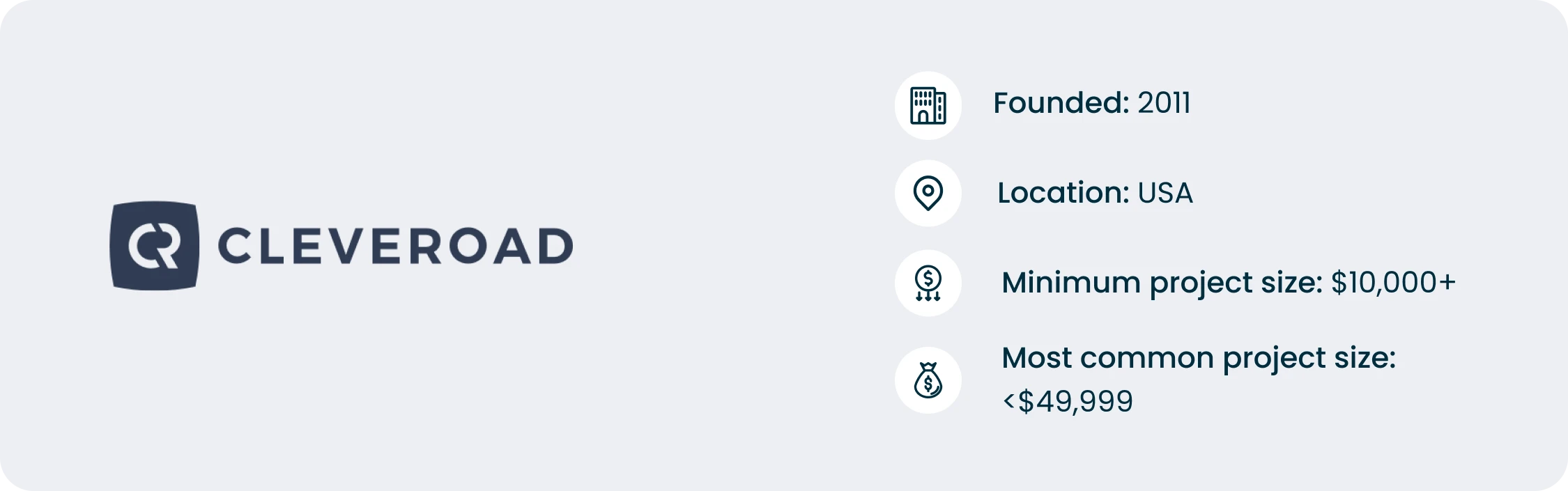
Cleveroad’s expertise in real‑time inventory control, cloud-native platforms, and API integrations enables retailers to unify disparate systems and improve operational visibility. Their agile development approach, combined with ISO‑certified quality standards, ensures reliable delivery and scalability for growing retail businesses.
- Retail projects they’ve completed: marketplaces, e-commerce SaaS solutions, trading apps, and the like.
- Best for: Mid-sized retailers and startups building cloud-native retail products from scratch.
Common Mistakes Retail Businesses Make When Choosing a Partner
To help you make a confident, informed choice, here are the most common mistakes we see retail businesses make and how to avoid them. Keep these points in mind to ensure a successful partnership and get a retail system that genuinely supports your business objectives.
1. Ignoring formalities in contracts
It might seem tedious, but contracts are the backbone of any successful partnership. Many retailers focus on the technical proposal and neglect key legal and operational details.
Without clearly defined deliverables, timelines, intellectual property terms, and liability clauses, you risk misunderstandings and delays. Make sure your agreement covers all critical aspects of the project upfront.
2. Choosing based on price alone
We get it: budget matters. But selecting a partner purely because their quote is the lowest can be a costly mistake. Industry data shows how expensive that mistake can become.
Our analysis found that one in six IT projects experienced cost overruns of 200% on average, and in extreme cases, projects came close to a 700% budget overrun. These blowups are typically linked to underestimated scope, weak governance, and poor execution, not ambitious features.
Generic vendors or bargain-priced offers often trigger exactly these risks, leading to hidden expenses such as rework, longer development timelines, and missed retail-specific requirements.
Instead, focus on value, experience, and proven expertise. The best partners don’t just look cheaper upfront. They protect your budget and save you money in the long run.
3. Skipping post-launch support
Your software doesn’t stop working once it’s launched. Retail solutions require ongoing maintenance, updates, and support, especially during peak seasons, promotions, or product launches.
Picking a partner without a clear post-launch support plan can leave you struggling with downtime, operational hiccups, and frustrated customers. Choose a team that will stick with you long after go-live, ensuring operational efficiency at every project stage.
4. Underestimating integration complexity
Modern retail depends on many interconnected systems, including POS systems, ERPs, accounting software, eCommerce platforms, inventory management, analytics, and more. Integrating these systems is rarely straightforward.
In the research on public-sector IT projects, integration challenges appear as a distinct risk factor. The analysis showed that complexity is a major contributor to cost overruns and schedule extensions in real deployments.
Retail specialists anticipate these challenges and design seamless integration workflows, but generic vendors may not. Ignoring the complexity can result in slow performance, data inconsistencies, and operational bottlenecks.
Follow our tips, and you will find a perfect partner that matches your budget, expectations, and long-term project goals.
Entrust Your Project to Retail Development Pros
Of course, choosing a retail software development company cannot be done at once. You should contact multiple vendors, gather information on their pricing, portfolios, customer reviews, and more. Equally important are the soft skills of your potential partner. The team should be transparent, approachable, and responsible.
If you are looking for exactly this type of partner, leave us a note.
During the discovery call, we’ll get to know each other, analyze your case, and present our capabilities. No obligations, no stress. Just a straight-to-the-point 30-minute conversation to help you decide if we are the right fit.